

Fresh pasta takes about 45 minutes from start to boiling water, most of which is hands-off resting time. The dough comes together quickly whether you mix it by hand or in a food processor, and the texture and flavor are noticeably better than anything dried.
Why You Will Love This Fresh Pasta Recipe
- Better Texture and Flavor Fresh pasta absorbs sauce in a way dried pasta never quite manages, and the texture is noticeably more tender.
- Two Mixing Methods Make it by hand with just a fork and a work surface, or use a food processor for a faster, more hands-off approach.
- Minimal Equipment Required A rolling pin works just as well as a pasta machine.
- Cooks in Minutes Fresh pasta goes straight from rolling into boiling water with no drying time needed, and it's done as soon as it floats.
- Versatile Base This dough works with nearly every sauce on Cleveland Cooking, from blush sauce to cottage cheese alfredo to lemon shrimp.
Ingredients for the Best Fresh Pasta Recipe
- All-Purpose or 00 Flour 00 flour is milled extra fine and produces a silkier, more elastic dough that's traditional for fresh pasta. All-purpose flour works well and is more accessible for most home cooks. Refer to the Measuring Flour post if you're unsure how to measure it accurately, since too much flour packed into the cup produces a dry, stiff dough.
- Eggs and Egg Yolks The combination of whole eggs and extra yolks is what gives fresh pasta its rich color and tender texture. The extra yolks add fat without adding excess liquid, which keeps the dough from becoming too wet to handle.
- Olive Oil A small amount adds pliability to the dough and makes it easier to roll thin without tearing.
- Sea Salt Seasons the dough itself rather than relying entirely on the boiling water for flavor. A small amount goes a long way since the dough is rolled thin.
Mixing the Fresh Pasta Dough By Hand
- Refer to the Measuring Flour post first if you're unsure how to measure flour accurately. Too much flour packed into the cup is the most common reason hand-mixed dough turns out dry and stiff.
- Pour the flour onto a clean work surface or into a large bowl and make a well in the center.
- Crack the eggs and add with the egg yolks into the well, then add the olive oil and sea salt.
- Use a fork to gently whisk the wet ingredients together inside the well, slowly drawing in flour from the inner edge as you go. Keep working around the edge without letting the liquid escape outward.
- Once the mixture is too thick to whisk, switch to your hands and bring in the remaining flour gradually until a shaggy dough forms.
- Knead by hand for several minutes until the dough comes together into a smooth, slightly tacky ball.
Mixing the Dough with a Food Processor
- Add the flour and sea salt to the bowl of a food processor and pulse two or three times to aerate the flour.
- With the processor running, add the eggs, egg yolks, and olive oil through the feed tube.
- Process until the dough forms a rough ball, about 30 seconds. If it's still crumbly, add a tablespoon of water and pulse again. Watch the video to see what the texture should look like.
- Turn the dough out onto a lightly floured surface.
- Knead by hand for two to three minutes until smooth and even, then shape into a ball.
Resting the Dough
- Cover the dough ball with plastic wrap or an inverted bowl.
- Let it rest at room temperature for 30 minutes. This relaxes the gluten and makes the dough significantly easier to roll without tearing or springing back.
Rolling the Pasta
- Divide the rested dough into smaller portions for easier handling.
- Roll the dough thin using a rolling pin or a pasta rolling machine. Both work well, though a pasta machine produces more consistent thickness.
- Cut the rolled dough into the shape needed for your recipe.
Cooking the Pasta
- Bring a large pot of well-salted water to a vigorous boil.
- Add the fresh pasta directly to the boiling water. There's no need to dry it first.
- Cook for just a few minutes until the pasta rises and floats to the surface.
- Remove as soon as it floats for a tender bite, or let it go slightly longer for a firmer texture.
Tips on Making the Homemade Pasta Recipe
- Don't skip the rest period. Thirty minutes lets the gluten relax fully, which makes rolling the dough thin much easier and reduces the chance of tearing.
- Have your boiling water at a full, vigorous boil before the pasta goes in. Fresh pasta cooks so quickly that a weak boil can leave it slightly undercooked in the time it takes to reach the surface.
- If you're not cooking the pasta immediately after rolling, dust it generously with flour and lay it out in a single layer rather than stacking it. Fresh pasta sticks together quickly without enough flour between layers.
- The dough should feel smooth and slightly tacky, not sticky or dry. If it's too dry to come together, add water a teaspoon at a time. If it's too sticky to handle, add a little more flour.
Troubleshooting the Fresh Pasta Recipe
- Dough won't come together in the food processor Add a tablespoon of water and pulse again. This usually solves it. If it's still not forming a ball, add water a teaspoon at a time until it does.
- Dough is too sticky to knead Add a small amount of flour to your work surface and your hands while kneading. Avoid adding too much at once since it can make the dough dry and stiff.
- Dough keeps springing back while rolling The gluten hasn't fully relaxed. Let it rest for an additional 10 to 15 minutes before trying again.
- Pasta is sticking together after rolling Dust generously with flour between layers and avoid stacking cut pasta directly on top of itself without separation.
- Pasta dough tears while rolling The dough may be too thin for the amount of gluten development, or it didn't rest long enough. Patch small tears by pressing the edges back together and let the dough rest a bit longer before continuing to roll.
This recipe can be used with Reuben Ravioli, Spicy Blush Sauce Recipe, and Spinach and Artichoke Pasta, or my Cottage Cheese Alfredo Sauce, and my Blackened Lemon shrimp pasta. You can also add fresh ricotta to the pasta.
FAQ's
Fresh pasta cooks incredibly fast. It usually takes just a few minutes in salted boiling water. You'll know it's done when it starts to float to the top.
No. While a pasta rolling machine works great and is preferred by some, you can absolutely roll and cut your fresh pasta using just a rolling pin.
Yes. The recipe provides instructions for both methods. You can make a well with the flour and gradually incorporate the wet ingredients by hand, then knead until smooth.
After forming the dough into a smooth ball, it's essential to cover it and let it rest for at least 30 minutes. This allows the dough to relax and fully hydrate, making it much easier to roll.
Join My Email List!
Get no-fuss recipes and real-world kitchen skills sent straight to your inbox.
For this specific recipe, you don't need to dry the pasta. Once you've rolled and cut it into your desired shape, it can go straight into a pot of salted boiling water.
All-purpose flour works great for this fresh pasta recipe. However, you can experiment with different flours to discover textures or flavors your family enjoys.
Recipe
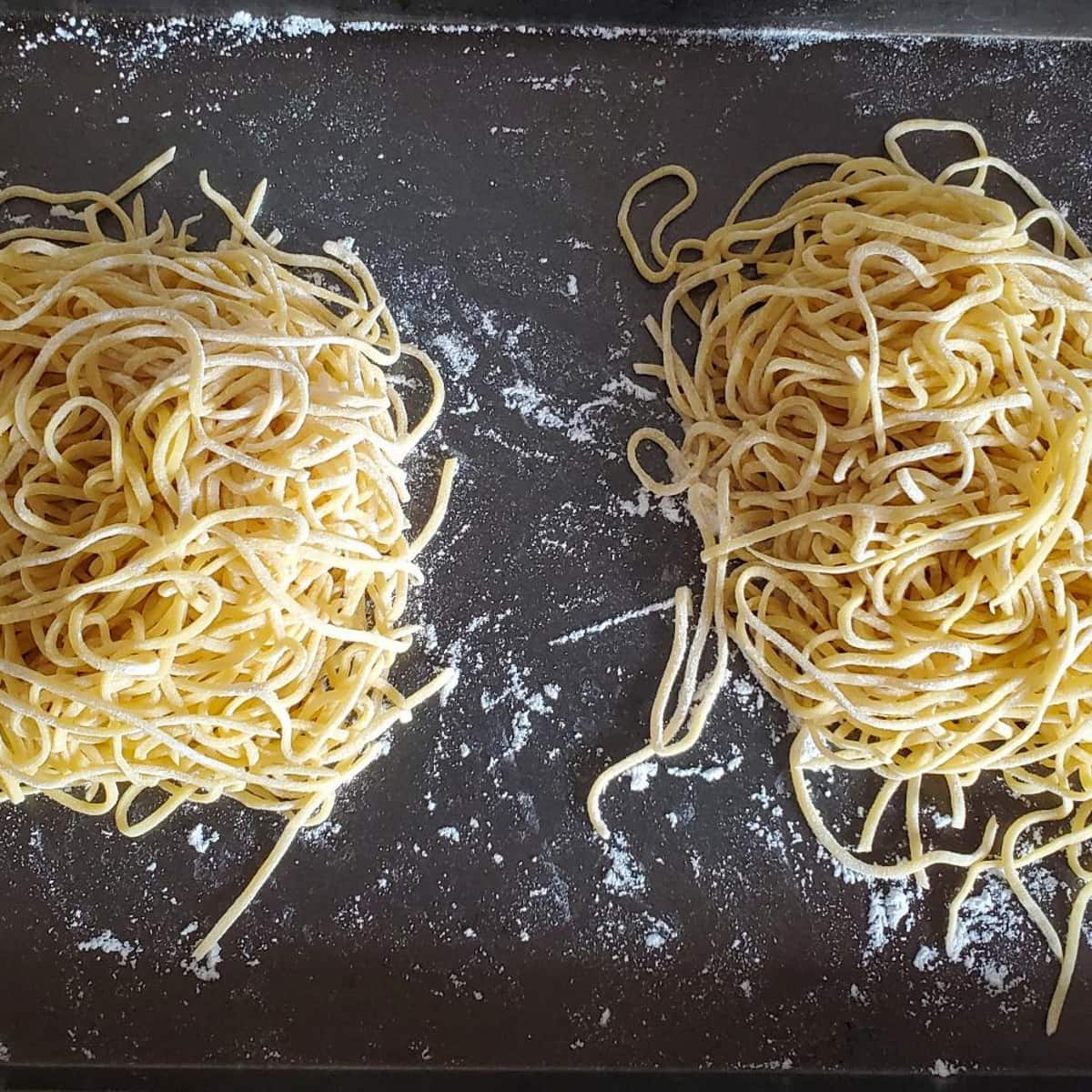
Fresh Pasta Recipe to Make at Home
Ingredients
- 2 large eggs
- 2 cups of all purpose or 00 flour
- 3 egg yolks
- 1 tablespoon of olive oil
- ½ teaspoon of sea salt
Method
- Use a food processor to make the pasta dough recipe.
- Place salt and flour in the food processor and pulse two or three times to aerate the flour.
- While the processor is running, add the eggs and olive oil
- When the dough comes together, stop the processor and place the dough on a lightly floured surface. See notes for pasta not coming together.
- Knead dough and form into a ball. Cover and let rest for 30 minutes.
Nutrition
Notes
Private Notes
Tried this recipe?
Let us know how it was!Like my recipes? Click below to favorite Cleveland Cooking on Google so my posts pop up first when you search!
+ Favorite on Google Search

Leave a Reply
You must be logged in to post a comment.