

Making classic French pâte sucrée from scratch sounds intimidating, yet it takes just 15 minutes with a food processor with five basic pantry ingredients. This crisp, sweet tart dough bakes into a sturdy, cookie like crust that holds heavy pastry cream, lemon curd, or chocolate ganache without turning soggy. By starting with ice cold butter, chilled water, and even a cold food processor bowl, you get bakery quality results right in your own kitchen.
Why You Will Love This French Pate Sucree Dough
- Quick food processor prep. You can bring the entire dough together in about 10 minutes without cutting butter in by hand.
- Sturdy cookie like snap. Granulated sugar and rich egg yolks bake into a crisp crust that holds wet fillings like lemon curd and pastry cream without getting soggy.
- Two tart crusts per batch. One batch makes enough dough for two 9 inch tarts, so you can bake one now and freeze the second disc for later.
- Five pantry staples. You only need flour, sugar, butter, egg yolks, and cold water with zero specialty ingredients required.
- Holds its shape. Starting with ice cold butter and a chilled processor bowl keeps the fat solid until it hits the hot oven, helping the crust hold sharp edges.
Ingredients for the Food Processor Pate Sucree
- All purpose flour. Provides the structure the tart crust needs to hold heavy fruit and custard fillings without collapsing.
- Granulated white sugar. Sweetens the dough and caramelizes during baking to create a crisp, sturdy, texture.
- Unsalted butter. One cup (two sticks) of cold unsalted butter cut into ⅓ inch cubes coats the flour particles to keep the crust tender while giving it rich flavor.
- Large egg yolks. Three cold egg yolks add richness and color, and bind the dough smoothly.
- Cold water. Four tablespoons of ice cold water hydrates the flour just enough to bring the crumbly dough together.
Making the Make Ahead Tart Dough
- Chill the food processor work bowl, metal blade, cubed butter, egg yolks, and water in the refrigerator for 15 to 20 minutes before starting so every component is very cold.
- Add the 2 ½ cups of all purpose flour and ⅓ cup of granulated sugar to the chilled food processor bowl and pulse 3 to 4 times until combined.
- Scatter the 1 cup of cold ⅓ inch butter cubes over the flour mixture and pulse in short 1 second bursts, about 8 to 10 times, until the mixture looks like coarse meal with pea sized pieces of butter remaining.
- Whisk the 3 cold egg yolks and 4 tablespoons of ice cold water together in a small bowl until smooth.
- Drizzle the egg yolk mixture over the flour and butter while pulsing in short bursts until the dough begins to clump together into moist crumbles that hold when pinched between your fingers.
- Dump the crumbly dough onto a clean work surface and divide it into two equal portions, placing each portion onto a large sheet of plastic wrap.
- Gather the corners of the plastic wrap over each portion and press the crumbs firmly together with your hands into a cohesive ball without kneading.
- Wrap each portion tightly in the plastic wrap and use a rolling pin or the palm of your hand to flatten each ball into a smooth disc about 5 to 6 inches wide and ½ inch thick.
- Refrigerate the wrapped dough discs for at least 30 minutes, or up to 3 days, until firm before rolling out to ⅛ inch thickness for your tart pan.
Tips for a Delicious French Sweet Tart Dough
- Why Everything Must Be Very Cold. Pâte sucrée relies on tiny, solid pieces of butter suspended in flour rather than melted fat. The motor housing and friction from the spinning blade generate heat quickly, so chilling the food processor bowl and blade for 15 minutes prevents the butter from smearing into a greasy paste. If the butter melts before baking, the dough becomes sticky, shrinks dramatically in the oven, and bakes up dense instead of crisp.
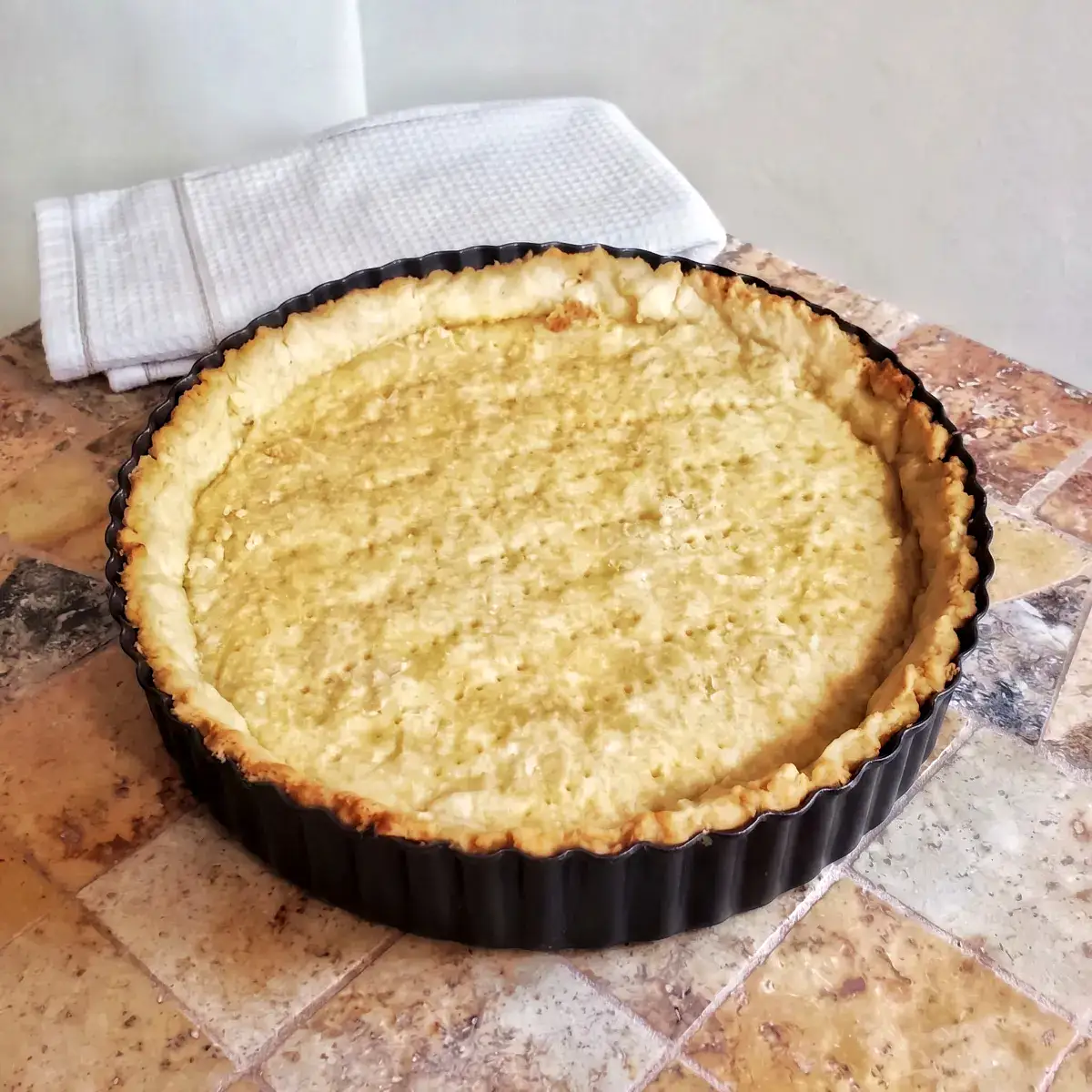
- How to Par Bake and Full Bake the Crust. Preheat your oven to 375 degrees F. Roll one chilled disc to ⅛ inch thick, ease it into a 9 inch removable bottom tart pan without stretching, trim the excess, and chill the lined pan for 30 minutes. Prick the base lightly with a fork. Line the cold crust with parchment paper, fill it with pie weights or dried beans, and bake for 10 minutes until the edges look set. For a par baked crust (used when baking with a custard or fruit filling), remove the parchment and weights and bake 5 minutes longer until pale gold. For a fully baked crust (used for no bake fillings like pastry cream or ganache), remove the weights and bake 10 to 12 minutes longer until deep golden brown and dry across the center.
- Do Not Stretch the Dough. When fitting the rolled dough into your tart pan, lift the edges and let the dough settle naturally into the bottom corner. Stretching the dough pulls the gluten strands tight, and they will snap back and shrink down the sides of the pan as soon as the crust hits the oven heat.
- Use Granulated Sugar for Extra Crunch. Traditional French recipes sometimes use powdered sugar for a sandy, melt in your mouth texture, while this version uses granulated sugar to give the baked crust a firmer, cookie like snap that stands up well to juicy berries and heavy fillings.
Troubleshooting Your Pate Sucree
- Dough is too crumbly to hold together. If the dough stays dusty after pulsing in the egg yolk mixture, add ice cold water 1 teaspoon at a time and pulse twice until the crumbs clump when squeezed.
- Dough cracks when rolling out. Butter that is too firm right out of the fridge will split at the edges under a rolling pin. Let the wrapped disc sit on the counter for 5 to 8 minutes until pliable, then roll from the center outward, rotating the dough a quarter turn after every pass.
- Crust shrinks or slumps down the pan sides. Shrinking happens when the gluten is overworked or the lined crust went into the oven warm. Always chill the lined tart pan for at least 30 minutes before baking and use plenty of pie weights pushed right up against the inner walls.
- Bottom crust puffs up in the middle. Air trapped between the pan and the dough expands into bubbles during baking. Press the dough firmly into the bottom angle of the pan, prick the base lightly with a fork before lining with parchment, and weight the center evenly.
- Soggy bottom after filling. Make sure the fully baked shell is completely cool before adding cold pastry cream or fruit. For extra insurance against moisture, brush the warm baked crust with a thin layer of beaten egg white and return it to the oven for 2 minutes, or paint the cooled shell with a thin coat of melted white or dark chocolate.
If you are looking for a pie crust with just as much flavor as my pate sucree recipes, try my make-ahead pie crust.
Looking for a gluten free option? I have an almond flour crust pie dough too.
Some great additions to use with your pate sucree crust are:
- Brown butter caramel sauce
- Sea salt caramel sauce
- Apple cider cream cheese frosting
- Chai cream cheese frosting
FAQs
Pâte sucrée is a sweet tart dough made with sugar and egg yolks that bakes into a crisp, sturdy, cookie like crust. Pâte brisée is an unsweetened, flaky pastry dough made with butter and water for savory quiches and pies, while pâte sablée contains a higher ratio of butter and powdered sugar for a delicate, sandy shortbread crumb.
Yes, you can wrap the flattened 5 to 6 inch dough discs tightly in plastic wrap, place them inside a freezer bag, and freeze for up to 3 months. Thaw a disc in the refrigerator overnight before rolling, or freeze an unbaked crust directly inside the tart pan and bake it straight from frozen by adding 3 to 5 minutes to the covered blind baking time.
Join My Email List!
Get no-fuss recipes and real-world kitchen skills sent straight to your inbox.
Roll the chilled dough to an even ⅛ inch (about 3 mm) thickness, making a circle roughly 11 to 12 inches wide for a standard 9 inch tart pan. Rolling thinner than ⅛ inch makes the crust fragile when unmolding, while rolling thicker leaves the center heavy and underbaked.
Yes, using ceramic pie weights or dried beans on top of parchment paper holds the sides upright and keeps the bottom flat while the butter sets. Without weights, the trapped steam lifts the center and causes the walls to slump inward.
An empty, fully baked tart shell stays crisp for up to 3 days when stored in an airtight container at room temperature. Once filled with pastry cream, lemon curd, or fresh fruit, serve the tart the same day or refrigerate it for up to 24 hours so the crust keeps its snap.
Having a reliable batch of homemade pâte sucrée in your refrigerator or freezer makes assembling bakery style fruit tarts, lemon curd tarts, and chocolate ganache desserts simple any night of the week. With five everyday ingredients and a cold food processor bowl, this crisp sweet tart dough comes together in just 15 minutes and bakes into a golden, sturdy shell every time.
Recipe
Pate Sucree
Ingredients
- 2 ½ cups of flour
- ⅓ cup sugar
- 1 cup of cubed butter cut in ⅓ inch cubes
- 3 egg yolks
- 4 tablespoons of cold water
Method
- Chill the food processor work bowl, metal blade, cubed butter, egg yolks, and water in the refrigerator for 15 to 20 minutes before starting so every component is very cold.
- Add the 2 ½ cups of all purpose flour and ⅓ cup of granulated sugar to the chilled food processor bowl and pulse 3 to 4 times until combined.
- Scatter the 1 cup of cold ⅓ inch butter cubes over the flour mixture and pulse in short 1 second bursts, about 8 to 10 times, until the mixture looks like coarse meal with pea sized pieces of butter remaining.
- Whisk the 3 cold egg yolks and 4 tablespoons of ice cold water together in a small bowl until smooth.
- Drizzle the egg yolk mixture over the flour and butter while pulsing in short bursts until the dough begins to clump together into moist crumbles that hold when pinched between your fingers.
- Dump the crumbly dough onto a clean work surface and divide it into two equal portions, placing each portion onto a large sheet of plastic wrap.
- Gather the corners of the plastic wrap over each portion and press the crumbs firmly together with your hands into a cohesive ball without kneading.
- Wrap each portion tightly in the plastic wrap and use a rolling pin or the palm of your hand to flatten each ball into a smooth disc about 5 to 6 inches wide and ½ inch thick.
- Refrigerate the wrapped dough discs for at least 30 minutes, or up to 3 days, until firm before rolling out to ⅛ inch thickness for your tart pan.
Nutrition
Notes
Full Bake Instructions | Follow the par bake steps, then remove the weights, prick the bottom lightly with a fork, and bake 10 to 12 minutes longer until deep golden brown and dry. Cool completely before filling.
Storage and Freezing | Wrapped dough discs keep in the refrigerator for up to 3 days or in the freezer for up to 3 months. Thaw overnight in the fridge before rolling.
Scaling Tip | This recipe already yields two tart crusts, which is ideal for weekend meal prep. You can double the batch by mixing two separate batches in the food processor so you do not overload the bowl, then freeze the extra flattened discs for upcoming holidays and family dinners.
Private Notes
Tried this recipe?
Let us know how it was!Like my recipes? Click below to favorite Cleveland Cooking on Google so my posts pop up first when you search!
+ Favorite on Google Search
Leave a Reply
You must be logged in to post a comment.