

I always thought it would be difficult to make a ricotta cheese recipe. Turns out it is the easiest cheese to make! I have found that it is a roll of the dice to get the right texture of ricotta cheese from a grocery store. You open the plastic container and hope the ricotta cheese is not pure liquid. I am sure you will find this ricotta cheese recipe as easy to make as I have found it to be!
Why Homemade Ricotta is Better
- Creamier Texture: Store-bought ricotta can be grainy. This homemade version is incredibly smooth, fluffy, and delicate.
- Better Flavor: It tastes like fresh sweet milk, not preservatives.
- Customizable: You can control the texture by how long you drain it (short time for soft dips, longer for lasagna).
What You Will Need
- 1 gallon of whole milk
- 1 teaspoon of citric acid or ⅔ cup of white vinegar
- 1 teaspoon of sea salt
The Milk for the Ricotta Cheese Recipe
I have only used whole milk in this recipe. I have not yet tried plant milks, not sure if they will work or not. It is important to get the milk up to 200 degrees F when you are making the recipe. An instant read thermometer comes in handy! The first few times I made this recipe I guessed what the temperature was and some of the cheese were not up to par. Do not use Ultra-Pasteurized milk (UHT). It has been heated to a high temperature that changes the protein structure, so it will not curdle properly. Look for regular pasteurized milk or raw milk.
White Vinegar or Citric Acid?
I have made this ricotta cheese recipe many times and both the white vinegar and the citric acid did a great job at forming the cheese. At a store in Cleveland, they happened to have citric acid and I picked some up. I liked the way it worked and so I kept up with it. However, the white vinegar works just as well. I don't use the white vinegar because I don't want to run out of it and forget to get more!
Yes Whey!
Whey is the liquid that is left over after draining the cheese. The whey makes a great liquid to make bread with! Plan ahead and you can have some great tasting bread with your ricotta cheese!
The ricotta cheese recipe would make a great addition to a pizza made with the pizza dough recipe! You can also use it in my Lemon Blueberry Ricotta Dip!
The most common reason for failure is using Ultra-Pasteurized (UHT) milk. High heat treatment changes the protein structure of the milk, preventing it from forming curds. Always check the label and use regular Pasteurized milk.
Yes! Fresh lemon juice is a great substitute and adds a lovely, subtle brightness. Use about ⅓ cup of fresh lemon juice for every gallon of milk.
Don't pour it down the drain! That liquid is "acid whey," and it's full of protein. You can use it to replace the water in pizza dough or bread recipes for extra flavor. It also works great in smoothies or soups.
Because it has no preservatives, homemade ricotta is best eaten fresh. It will stay good in an airtight container in the refrigerator for 4-5 days.
If your cheese is too dry or crumbly, simply stir a tablespoon or two of the reserved whey (or a little heavy cream) back into the curds until it reaches your desired creamy consistency. To prevent this next time, drain it for a shorter period (just 2-3 minutes for a soft, dip-like texture).
Recipe
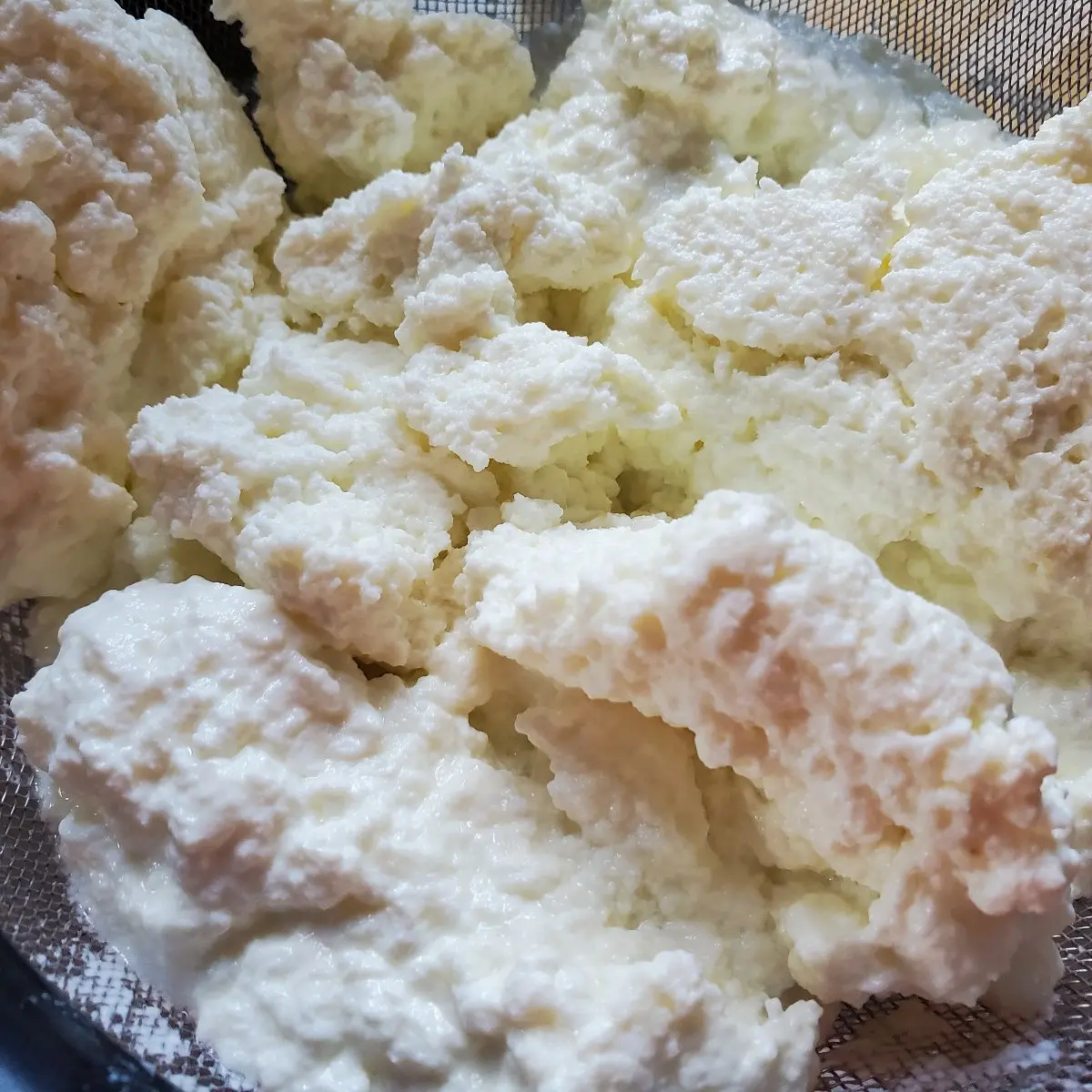
Easy Homemade Ricotta Cheese (3 Ingredients)
Ingredients
- 1 gallon of whole milk
- 1 teaspoon of citric acid or ⅔ cup of white vinegar
- 1 teaspoon of sea salt
Method
- In a large pot, bring the gallon of whole milk up to 200 degree F. Stirring frequently.
- Once the milk has reached 200 degrees F, take the pot off of the fire.
- Stir in the salt and citric acid to incorporate well.
- After incorporating, stop stirring and let the milk set for 10 minutes.
- After 10 minutes, start to skim the curds off of the top of the pot into a cheesecloth lined sieve and let drain.
- Place in an airtight container and store in the refrigerator.
Nutrition
Private Notes
Tried this recipe?
Let us know how it was!Key Takeaways
- Homemade ricotta cheese is easy to make with just a few ingredients: whole milk, citric acid or white vinegar, and sea salt.
- Use regular pasteurized or raw milk; avoid ultra-pasteurized milk as it doesn't curdle properly.
- Both white vinegar and citric acid work well for making ricotta cheese, but citric acid has become a preferred choice for consistency.
- Whey, the leftover liquid after making cheese, can be used to bake delicious bread.
- This ricotta cheese pairs perfectly with homemade pizza dough.



Leave a Reply
You must be logged in to post a comment.