

American buttercream frosting is the most straightforward frosting you can make at home. Four ingredients, 15 minutes, and a reliable result every time. This is the frosting that works for school cupcakes, birthday cakes, and anything that needs a smooth, pipeable topping without a complicated technique.
What Is American Buttercream
- American buttercream is a frosting made by beating butter and powdered sugar together with a small amount of liquid and flavoring.
- It is the most common frosting style in American home baking because it requires no cooking, no thermometer, and no special technique.
- The result is a sweet, dense, stable frosting that holds its shape at room temperature and pipes cleanly onto cakes and cupcakes.
- Unlike European-style buttercreams such as Swiss meringue or Italian buttercream, American buttercream requires no cooking of egg whites or hot sugar syrup.
- The trade-off is that it is sweeter and denser than its European counterparts, but for everyday baking it is the most reliable and forgiving option available.
Why You Will Love This Recipe
- Budget Friendly Making this at home is often more cost-effective than buying multiple containers of pre-made frosting from the store.
- Time Saver You can have a batch ready to go in just 15 minutes, which is helpful for those last-minute school events or busy weeknights.
- Simple Ingredients This recipe uses only four everyday items you likely already have in your pantry or fridge.
- Real Food Flavor Because it uses real butter and heavy cream, the taste is much richer and more satisfying than processed alternatives.
- Family Tested This frosting is a favorite in my house and is designed to please both kids and adults alike.
American Buttercream vs Other Buttercreams
- American buttercream butter, powdered sugar, and a small amount of liquid. Sweet, dense, and stable at room temperature. No cooking required.
- Swiss meringue buttercream egg whites and sugar cooked over a double boiler, then whipped into a meringue before butter is added. Silkier, less sweet, and more temperature-sensitive than American buttercream.
- Italian meringue buttercream hot sugar syrup poured into whipping egg whites before butter is added. The most stable of the three and holds up best in warm conditions but is also the most technically demanding.
- French buttercream made with egg yolks rather than whites, producing a rich, golden frosting with a custard-like flavor. The least sweet of the four but the most perishable.
- For everyday home baking, American buttercream is the practical choice. For a wedding cake or a dessert that needs to hold in warm conditions for hours, a European-style buttercream is worth the extra effort.
The Four Ingredients for the Buttercream Frosting
- Butter Four sticks at room temperature is the correct amount for this recipe. Room temperature means soft enough to press an indentation with your finger but not shiny or greasy. Cold butter produces a lumpy frosting that never fully smooths out. Melted butter produces a greasy, separated mess. Thirty minutes on the counter from fridge temperature is usually enough.
- Powdered Sugar Two pounds is approximately eight cups. Always use powdered sugar rather than granulated in American buttercream. Granulated sugar crystals do not dissolve when beaten into butter and produce a gritty texture regardless of how long you mix. The small amount of cornstarch in powdered sugar is what allows it to dissolve completely and produce a smooth result.
- Heavy Whipping Cream A quarter cup loosens the frosting and contributes to the light, creamy texture. Adding more produces a softer, fluffier frosting. Adding less or omitting it produces a stiffer frosting suited for detailed piping work.
- Vanilla Extract A teaspoon rounds out the butter and sugar flavor and adds warmth. Clear vanilla extract produces a brighter white frosting if color matters for your project. Standard vanilla extract produces a slightly off-white frosting with a more complex flavor.
- Equipment Recommendation I recommend using a 6-quart stand mixer, such as a Kitchen Aid stand mixer, to keep the sugar from flying out of the bowl. For storage, use wide-mouth glass jars to keep the frosting fresh in the fridge.
Buttercream with Granulated Sugar
- American buttercream uses powdered sugar rather than granulated sugar for a specific reason.
- Powdered sugar is finely ground and contains a small amount of cornstarch, which allows it to dissolve completely into the butter without any gritty texture.
- Granulated sugar has larger crystals that do not dissolve when beaten into cold butter, which produces a noticeably grainy frosting no matter how long you mix it.
- If you only have granulated sugar, the workaround is to make a simple syrup by dissolving the sugar in an equal amount of water over heat, then cooling it completely before beating it into the butter. This produces a smooth result but changes the texture significantly and results in a much softer, less stable frosting.
- For American buttercream, powdered sugar is the correct and only reliable choice.
Mixing the American Buttercream Frosting
- Add the butter, sugar, cream, and vanilla to your mixer bowl.
- Use the paddle attachment to stir the sugar and butter by hand before turning on the power. This prevents a sugar cloud in your kitchen.
- Start the mixer on the lowest setting.
- Increase the speed to medium as the sugar incorporates.
- Stop and scrape the bottom of the bowl to ensure no dry sugar is hiding.
- Whip for 7 to 10 minutes until the texture is smooth.
American Buttercream for Piping
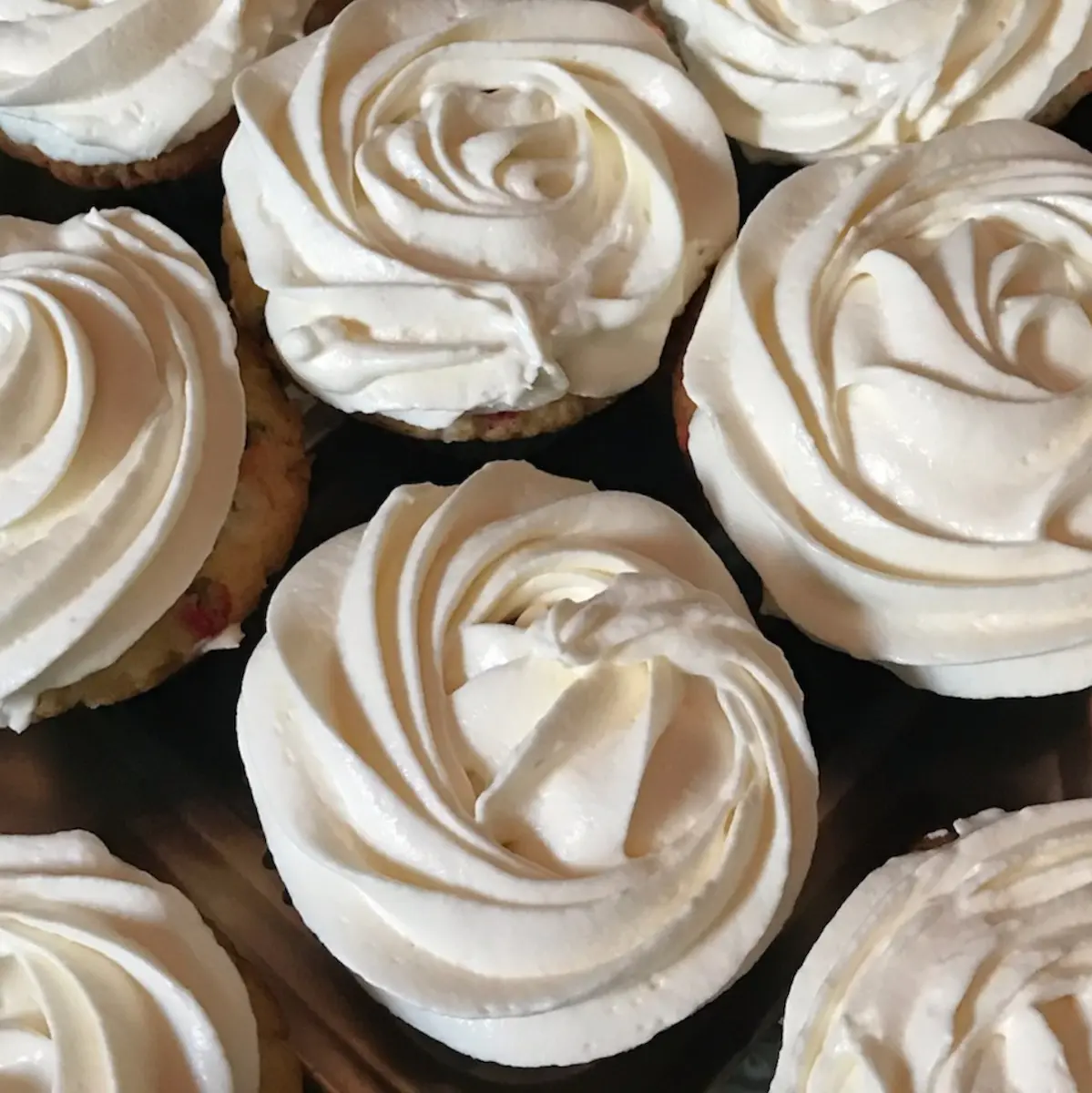
- American buttercream pipes well because of its density and stability. It holds its shape at room temperature, which makes it practical for decorating cakes and cupcakes that will sit out during a party or event.
- The target consistency for piping is a frosting that holds a peak when you lift the beater but still looks smooth and slightly glossy rather than dry or crumbly.
- To stiffen for detailed piping, add powdered sugar one tablespoon at a time and mix briefly between each addition until the frosting holds sharp edges.
- To loosen for spreading, add heavy cream one teaspoon at a time and mix briefly until it reaches a spreadable consistency.
- Using the paddle attachment produces a denser, smoother result suitable for piping. Switching to the whisk attachment at the end incorporates more air and produces a fluffier frosting that works better as a spread than as a piped decoration.
Stiff American Buttercream
- Stiff American buttercream is the same base recipe with the ratio adjusted toward more powdered sugar and less liquid.
- It is used for detailed piping work like roses, ruffles, and sharp borders where the frosting needs to hold a precise shape without softening.
- To make stiff American buttercream from this recipe, reduce the heavy cream to one tablespoon rather than a quarter cup and increase the powdered sugar by half a cup.
- Stiff buttercream can tear the surface of a delicate cake if applied with too much pressure. Always start with a thin crumb coat, let it set in the fridge for 15 minutes, and then apply the stiff frosting over a stable base.
- Stiff buttercream shows air bubbles more visibly than a softer version. Switching to the paddle attachment and mixing on low for the final two minutes reduces bubbles significantly.
Helpful Tips for American Buttercream Success
- Check the Butter Texture Your butter should be soft enough to leave an indentation when pressed but should not look oily or melted.
- Avoid the Sugar Cloud Before turning on your mixer, stir the butter and powdered sugar together by hand using the paddle attachment to keep the sugar from flying out of the bowl.
- Scrape the Bowl Use a spatula to scrape the sides and the very bottom of the bowl at least two or three times to ensure every bit of sugar is fully incorporated.
- Choose Your Texture Use the paddle attachment for a dense, smooth frosting or switch to a whisk attachment at the end if you prefer a fluffier, airier result.
- Scaling for Success If you need to double the recipe for a larger project, add the powdered sugar in stages so your mixer can handle the volume easily.
- For stiff piping work Reduce the heavy cream to one tablespoon and add an extra half cup of powdered sugar. This produces a frosting that holds sharp edges and detailed shapes without drooping."
What Could Go Wrong With My American Buttercream?
- The frosting feels grainy or gritty This happens when the powdered sugar hasn't dissolved into the butter completely. To fix this, continue mixing on medium speed and ensure you have scraped down the sides of the bowl where dry sugar often hides.
- The mixture looks curdled or broken This usually occurs if your butter was too cold or your heavy cream was added straight from the fridge while the butter was warm. Ensure all your ingredients are at a similar room temperature before starting.
- The frosting is too thin to pipe If your kitchen is warm or you added a bit too much cream, the frosting might be soft. You can fix this by adding extra powdered sugar one tablespoon at a time until it reaches the thickness you need.
- The sugar made a mess everywhere If you start the mixer on a high speed immediately, the light powdered sugar will fly out. Always start on the lowest possible setting and only increase the speed once the butter has started to grab onto the sugar.
- The frosting is too sweet American buttercream is naturally sweet because of the powdered sugar ratio. A pinch of sea salt added to the finished frosting balances the sweetness noticeably. Alternatively, a small splash of lemon juice or a teaspoon of cream cheese adds tartness that cuts through the sugar without changing the texture significantly.
Pairings and Other Frostings
If you are looking for something to use the buttercream on, try my simple vanilla cupcake recipe! Vanilla cupcakes ready in 30 minutes!
You can also try my other frostings!
- Whipped Peanut Butter Frosting
- Apple Cider Cream Cheese Frosting
- Whipped Salted Caramel Frosting
- Chantilly Frosting
- Chocolate Buttercream Frosting
FAQ's:
American buttercream is known for being a simple, fast-to-make frosting that uses butter, powdered sugar, and a liquid like milk or cream. Other types, such as Swiss or Italian meringue buttercreams, require cooking egg whites and creating a meringue, which results in a lighter, less sweet frosting.
A grainy texture is almost always caused by powdered sugar that hasn't fully dissolved. To avoid this, be sure to start mixing on a low speed, then gradually increase it. Additionally, scraping down the sides and bottom of the bowl multiple times during the mixing process ensures all the sugar is incorporated.
It can take anywhere from 30 minutes to an hour for cold butter to come to a proper room temperature. The butter should be soft enough that you can easily press your finger into it, but not so soft that it is oily or starting to melt.
Join My Email List!
Get no-fuss recipes and real-world kitchen skills sent straight to your inbox.
Yes, a hand mixer will work just fine for this recipe. Be prepared to mix for a bit longer, and make sure to scrape the bowl frequently to ensure all ingredients are fully combined.
The sweetness of American buttercream comes from the powdered sugar. To make it less sweet, you can try reducing the amount of sugar by a small amount. You can also add a pinch of salt to balance the sweetness, or use a meringue-based buttercream recipe, which is naturally less sweet.
Recipe
Easy 4-Ingredient American Buttercream Frosting
Ingredients
- 4 sticks of room temperature butter
- ¼ cup heavy whipping cream
- 2 pounds of powdered sugar
- 1 teaspoon of vanilla extract
Equipment
Method
- Place all ingredients into a bowl of a stand mixer or bowl where you will be mixing in.
- By hand using the mixing beater, mix the butter and powdered sugar up a bit to avoid the powdered sugar from causing a mess when turning the mixer on.
- Turn the mixer on at a slow setting to start with then gradually bring the speed up as the mixture comes together.
- Scrape the sides and bottom of the bowl 2-3 times during the mixing process. The whole process will take about 7-10 minutes. Mixture should be smooth and not grainy. Any unmixed sugar will cause the mixture to be grainy.
- If needed, store in the refrigerator for up to 5 days or in the freezer for up to 3 months.
Nutrition
Notes
Private Notes
Tried this recipe?
Let us know how it was!Like my recipes? Click below to favorite Cleveland Cooking on Google so my posts pop up first when you search!
+ Favorite on Google Search
Leave a Reply
You must be logged in to post a comment.