

How do I keep produce fresh at home? Most home cooks have experienced the disappointment of reaching for a head of lettuce or a bunch of celery only to find it limp and gross. This loss of texture is not just an issue of visual appeal, but a sign that your veggies and fruits are on their way out. Understanding why this happens requires a quick look at the biology of the vegetables we buy.
Jump To What You Need
The Science of Freshness
- Plants rely on internal water pressure called turgor pressure to stay upright and crunchy
- When plant cells are full of water they push against rigid cell walls to create a satisfying snap
- Loss of water within these cells leads to a drop in pressure and a sagging structure
Osmosis and Freshness In The Fridge
The environment inside your refrigerator is often the primary enemy of this crunch. Most refrigerators are designed to remove moisture from the air to prevent frost buildup. This creates a very dry atmosphere that acts like a sponge. Moisture evaporates from the surface of your vegetables into the dry air of the fridge. One of the most effective ways to keep things upright and crisp is through controlled humidity. This is why refrigerators come with crisper drawers.
A common mistake that ruins the crispness factor is the early introduction of seasonings or dressings. This brings us to the concept of osmosis. Osmosis causes water to move toward higher concentrations of salt or sugar. This means water will get drawn out if salt or sugar are sprinkled on the lettuce.
- Seasoning a vegetable creates a high concentration of solutes on the plant skin
- Cell water rushes out to dilute the seasoning which causes the vegetable to sweat and wilt
- Just like a layered salad with added sugar, like a layered salad recipe, the lettuce will start to wilt after a night in the fridge.
- However, this is also a great way to get a bowl of strawberries juicy; just sprinkle them with sugar
Where Do I Store The Rest Of My Produce?
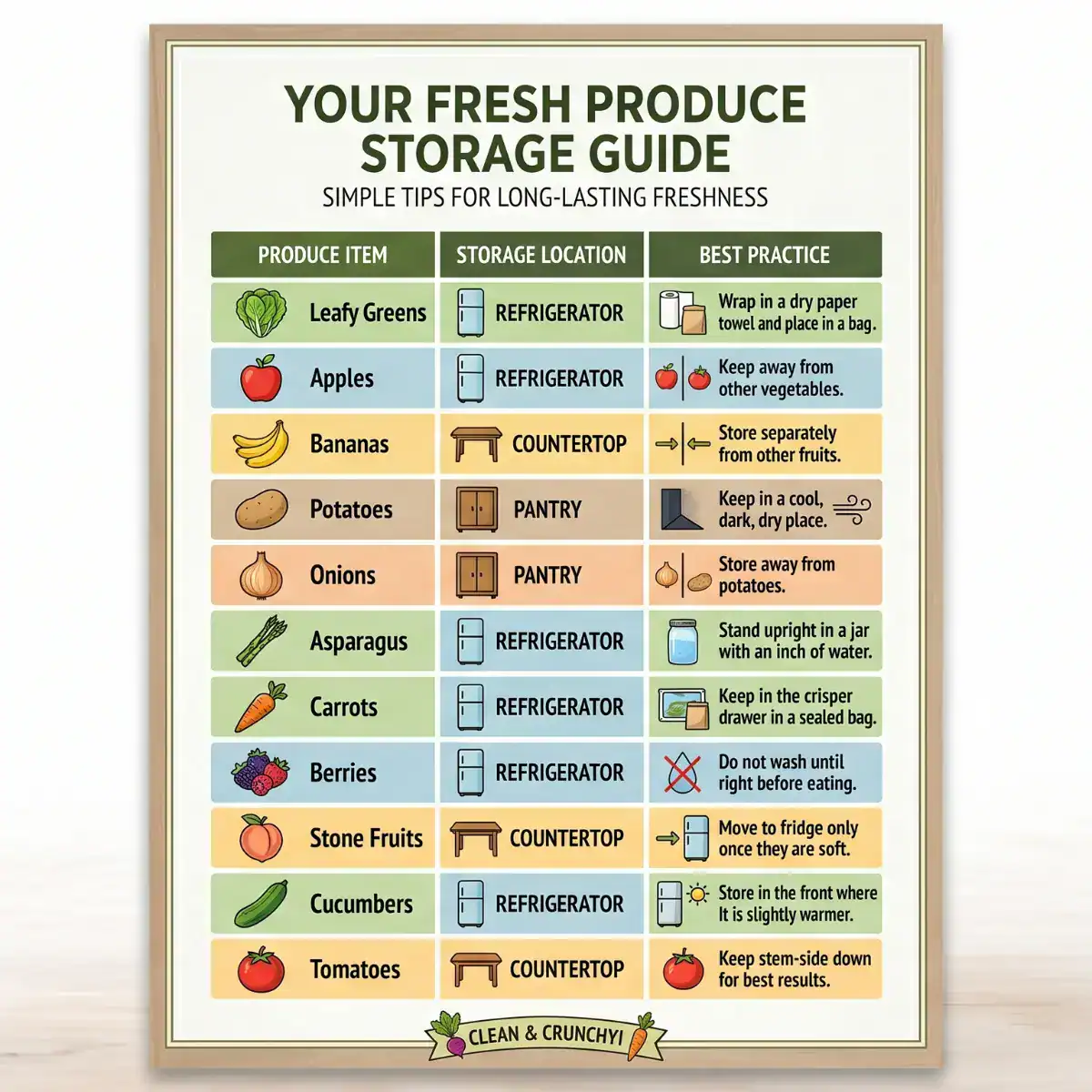
Temperature and airflow also play an important role in keeping your produce fresh. While we want to keep things from drying out, vegetables still need to breathe. If you store your greens in a completely airtight plastic bag, they can suffocate on their own carbon dioxide or build up too much heat. However, a paper bag will keep air from being trapped.
- Potatoes and onions prefer cool, dark, dry places rather than the damp cold of a refrigerator.
- Asparagus stays vibrant longer when stored upright in a small amount of water like flowers
- A dry paper towel placed inside a bag of greens absorbs excess moisture that causes slime
- Perforated bags or vented containers allow for necessary airflow while maintaining humidity
- Paper bags are great for ripening stone fruits such as peaches and plums
When To Separate Your Produce
We must also consider the hidden chemical signals that plants send to one another. Many fruits and vegetables release a gas called ethylene as they ripen. This gas is a powerful ripening agent that can cause neighboring produce to age prematurely. Apples, bananas, and tomatoes are famous for being high ethylene producers.
- Ethylene gas triggers the breakdown of chlorophyll and cell walls in sensitive vegetables
- High ethylene producers should be stored in a separate area from delicate leafy greens
- Proper separation prevents vegetables from turning yellow or soft overnight
- If you need to get those bananas to turn yellow, just add an apple to the mix
The next time you reach for that head of lettuce and find it crisp, cold, and ready to go, you'll know exactly why and it won't be luck.
Join My Email List!
Get no-fuss recipes and real-world kitchen skills sent straight to your inbox.
Like my recipes? Click below to favorite Cleveland Cooking on Google so my posts pop up first when you search!
+ Favorite on Google Search



Leave a Reply
You must be logged in to post a comment.